Driscoll’s New CEO Inherits a Pesticide Protest Fight Her Predecessor Couldn’t Win

Soren Bjorn is out after less than three years running the world’s largest berry company. His replacement inherits a leadership test that goes far beyond berries.
EXPERT OPINION BY DAN SCHAWBEL, MANAGING PARTNER OF WORKPLACE INTELLIGENCE

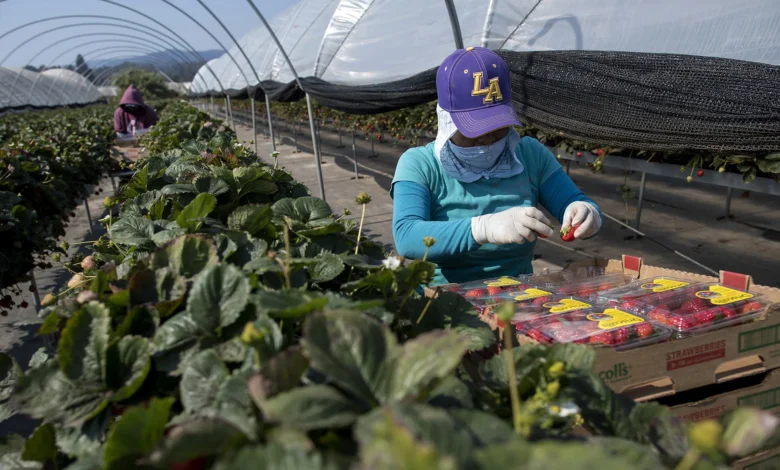
A worker packages strawberries at the Driscoll’s facility in Watsonville, California. Photo:
Driscoll’s, the Watsonville, California based company that grows and markets more berries than any other in the world, announced last week that CEO Soren Bjorn is stepping down after less than three years in the role. His replacement, Brie Reiter Smith, is the great-granddaughter of one of the company’s co-founders and the daughter of a former CEO. She has worked in various roles at Driscoll’s for more than a decade and became vice chair of the company’s board in January.
“While I may not have followed the traditional path to this role, no one believes in our company’s mission more than me,” Smith said in a press release announcing the change. Bjorn could not immediately be reached for comment, and Driscoll’s did not answer follow up questions about the reason for his departure which first reported the news
The pressure behind the timing
The leadership change follows a sustained campaign by local activists in California’s Pajaro Valley, where Driscoll’s grows much of its fruit, over the company’s use of pesticides near schools and farmworker communities. The company has faced lawsuits over its pesticide practices and a wave of public scrutiny after a county health report found elevated childhood cancer rates among non-Hispanic white children countywide from 2018 to 2022, though the report found no elevated rates in the county’s agricultural south side specifically, and did not establish that pesticides caused the increase.
Last year, two activists, Providence Martinez Alaniz and Omar Dieguez, went on hunger strikes to draw attention to the issue. Alaniz was hospitalized and stopped her fast after roughly two weeks. Dieguez continued his for 30 days. This August, activists used the stage at the Watsonville Strawberry Festival to protest the company again.
Refreshed leadership advice from CEO Stephanie Mehta
An Inc.com Featured Presentation
A guarded company tries a different approach
What makes this moment notable for other leaders is what happened right before the CEO change. In June, Smith did something Driscoll’s, a notoriously private, family-controlled company, rarely does: she engaged critics directly and publicly. She took out a full-page ad in the Santa Cruz Sentinel and used it to answer the activists targeting her company.
“The story being told about Driscoll’s, my family, and the farming community feels so disconnected from the reality I have experienced my entire life,” she wrote, adding that the company continues to expand its organic production and is investing in ways to reduce its reliance on traditional pesticides. She also asked activists to stop targeting the company and its leaders and owners personally.
The response leaders should pay attention to
The letter did not settle the matter. If anything, it drew a sharper line between the two sides, prompting the activists to answer back almost immediately. Alaniz responded with her own open letter in the Sentinel, rejecting the idea that activists were being unfair or personal. “We are not ‘disconnected from reality,’ we are living it every single day,” she wrote. “Holding corporate leadership accountable is not a ‘personal attack,’ it is democracy and community defense.”
Source: www.inc.com